Showing posts with label soup. Show all posts

Monday, January 25

Recipe: Paula Butturini's Zuppa di Fagioli / Italian White Bean Soup

Paula Butturini is the author of Keeping the Feast, a memoir in which food plays a central theme. You can read my review of it here. The book doesn't include recipes, but Paula was kind enough to answer my last minute request for a favorite simple cold weather dish, offering up this healthy and comforting Italian soup.

After cooking some up over the past grey and rainy weekend, I can see why her family likes it so much. A big pot of this soup in the fridge is the perfect thing to have on hand for quick, tummy-warming meals and filling, after-chore snacks.


Onions and tomatoes and carrots and a meaty smoked ham hockoh my!

Paula Butturini's Zuppa di Fagioli / Italian White Bean Soup
(My version made about 9 cups)

Paula says:
Whenever it's snowing, or simply dank and cold, my family likes eating sturdy soups to ward off mid-winter chills. This hearty Italian soup—which can be made with any dried white beans or a combination of varieties—warms our kitchen while it's cooking and warms us through when we sit down to eat it.

You can speed the whole process by using a 20-oz can of good quality, canned, white or cranberry beans, and using only 3 to 4 cups of water. In that case, you simply skip Steps 1 and 3, and add the canned beans and water to the stockpot at the end of Step 2.

My notes:
This is the sort of recipe that invites improvisation and experimentation. You could make it ten different times and end up with ten different soups—all of them good. Just use what you have on hand and personalize the pot to suit your taste.

I tend to prefer thick (dare I say sludgy?) soups to brothy ones, so I reduced the amount of water, upped the veggies, and added extra beans (I used canned organic cannellini beans, also known as white kidney beans).

For the pork portion, I used a small but meaty smoked ham hock from the locally raised hog we bought a while back and had butchered to our specifications (and which has sadly just about all been eaten up). Good call—it added a wonderful smoky flavor.

After the soup finished simmering, I cut the meat from the bone and into small pieces, then stirred the ones I didn't pop in my mouth back into the pot.

If you want to make a vegetarian version, you could toss in some fresh (or even dried) herbs to add more depth. It would probably also be very tasty made with good chicken stock instead of water.

Next time I'll stir in some kale (I still have a beautiful bag of homegrown 'cat cabbage' in the fridge) or Swiss chard (my favorite garden green), or maybe even a few big handfuls of fresh spinach. A little chopped arugula (so easy to grow!) sprinkled on top just before serving would add a nice zippy touch.

My plan was to cook the soup and serve it the next day, waiting, as Paula suggests, to add the pasta until then. But the texture ended up so thick that I decided the macaroni might seem out of place and simply left it out. Don't skip the parsley and Parmigiano, though—they're the perfect finishing touch.


I love cozy soup season.

Paula's original recipe is below, with my changes noted in parentheses. As always, I urge you to seek out locally produced and organic ingredients—they really do make a difference.

1 cup dried white or cranberry beans (I used two 15-ounce cans of cannellini beans)
2 quarts water (I used 2½ cups)
3 tablespoons olive oil
1 large onion, finely chopped (I used 2 cups)
1 large carrot, finely chopped (I used 1 slightly mounded cup)
2 stalks celery, with their leaves, finely chopped (I used 1 slightly mounded cup)
3 garlic cloves, finely chopped (I used 1½ Tablespoons)
1 ham bone, 1 pork rib, or 1/4 lb. salt pork (I used a 10-ounce smoked ham hock)
Small can Italian tomatoes, roughly chopped (I used a 28-ounce can of diced tomatoes)
1½ teaspoons salt
Freshly ground black pepper
1/2 cup small, tubular macaroni (I left it out)
Freshly grated Parmigiano cheese (I used 1/2 cup Pecorino Romano)
Handful of finely chopped fresh, flat-leaved parsley (I used 1/2 cup)

1. (I skipped this step since I used canned beans.) In a 3- to 4-quart saucepan, bring the dried beans and 2 quarts of water to a boil over high heat; let boil 2 minutes. Remove from heat and let beans soak for 1 hour.

2. While beans are soaking, finely chop the onion, carrot, celery and garlic. Heat the olive oil in a large, heavy-bottomed stockpot and sauté the onion over medium heat until lightly colored. Add the carrots, celery, and garlic plus ham bone, pork rib or salt pork and continue sautéeing for about 5-10 minutes. (I turned the ham hock every few minutes so each side would brown.)

Then add chopped tomatoes and simmer 10 minutes. (I added 1/2 cup of water with the tomatoes, simmered 10 minutes, then added the two cans of beans and 2 more cups of water.)

3. (I skipped this step.) Once the beans have soaked for an hour, drain them, making sure to save the bean water. Add enough additional cold water to make 2 quarts. Then add beans and the 2 quarts of bean water to the vegetables in the stockpot.

4. Bring contents of stockpot to a boil, then cover and cook over low heat for about 50 minutes, until vegetables are tender (I cracked the lid and simmered for 60 minutes). Remove ham bone, pork rib or salt pork. (I cut the meat off the ham hock and stirred it back into the blended soup.)

You can pass half the vegetables through a food mill back into the pot, the way this soup is usually served in Italy, or you can pass the entire contents of the pot through a food mill, or use an immersion blender to purée the soup lightly. (I used my KitchenAid hand blender for three seconds on speed number three. I love that thing. I also love my Oxo Good Grips food mill.)

Don't over-process, as it tastes best when it still has some texture. If the soup seems too thick, you can add water to thin it; every batch seems to absort different amounts of liquid.

5. Add salt and pepper, then bring soup back to a boil and add the pasta, cooking it about 2 minutes less than called for on the box. Let the soup stand covered for 10 minutes, then stir in the parsley and Parmigiano and serve immediately. (I garnished the bowls of soup with more parsley and cheese.)

Paula's note: You can prepare the entire soup ahead of time—it actually tastes better if it spends a night in the fridge and is reheated the next day—but DON'T cook the pasta until you're ready to serve it, or the macaroni will turn to an unappetizing mush. (I cooked the soup, let it sit in the fridge overnight, then reheated it on the stove, stirring in the cheese and parsley just before serving.)

How about some homemade bread to go with your soup?
Beyond Easy Beer Bread (my most popular recipe)
Whole Wheat Beer Bread
Onion Rye Beer Bread
Savory Feta Cheese & Scallion Scones

Easy Rosemary Focaccia
How To Make Pita Bread
No-Knead Crusty Freeform Bread
Oatmeal Toasting Bread (makes great rolls, too)
Fresh Tomato & Basil Whole Wheat Sourdough Bread
Carrot Herb Rolls (and a beautiful bread book for beginners)

And here are some more Less Fuss, More Flavor soups:
Simple & Healthy Swiss Chard Artichoke Soup
Roasted Red Pepper Tomato Artichoke Soup
Cream (or not) of Artichoke Soup With Garlic, Onions & Garbanzo Beans
Broccoli Onion Garbanzo Bean Soup
Susan's Super Spinach Soup

Garlic Lover's White Bean Soup (fat free, vegan, & delicious!)
Hearty Lentil Soup with Smoked Sausage
Use It Or Lose It Lentil & Escarole Soup
Spur Of The Moment Summer Squash Soup
Simple Summer Harvest Soup
Simple Summer Harvest Soup: The Autumn Version
And in summer, there's Quick & Easy Gazpacho

Still hungry? You'll find links to all my sweet and savory Less Fuss, More Flavor recipes in the Farmgirl Fare Recipe Index.

© FarmgirlFare.com, the soup's on foodie farm blog where Farmgirl Susan shares recipes, stories, and photos from her crazy country life on 240 remote Missouri acres—and the simplest dishes are often the very best.

Tuesday, December 30

Recipe: Simple & Healthy Swiss Chard Artichoke Soup (and Crazy Crossover Foods)


Healthy, hearty, low fat, high flavor, and packed with vegetables? Homemade soup!

I like to think of myself as an adventurous eater. I always look forward to delving into the local food scene when I'm away from home, whether it's a couple hundred miles or a couple of continents away. I've eaten everything from bowls of black rice pudding in Bali to a bag of fried okra at a gas station in Louisiana.

Maple syrup in Vermont, macadamia nut ice cream and fresh pineapple in Hawaii, lobster in Maine? Of course. Pan-fried squirrel for dinner? A local Missouri specialty that I discovered is surprisingly good. Then again, pretty much anything rolled in flour and fried (which is the standard way of preparing things around here) tastes good in my book.

I don't do much traveling now that I live on a farm with dozens of animals, but I still get out enough to know there's something weird going on with our food these days—and it has nothing to do with culture or location. Always desperate to come up with something new and exciting, marketing departments everywhere are inventing some really strange stuff.

Banana nut bread cereal? Chili cheese taco dogs? Toasted coconut cream pie latté? Philly cheese steak pizza?

I can't be the only one who finds these things, which are all real by the way, a little freaky. Pizzarito. Why? Personally I prefer my food in its natural state; I want banana bread in a loaf, chili dogs in buns, and pie with a crust in a pan where it belongs—though I'll admit that latté did sound kinda good.

No foodie is infallible, though, and one blustery day last winter I took an upside down ride on the recipe roller coaster. I had a bumper crop of Swiss chard in the greenhouse and a craving for soup in the kitchen, so I turned my popular Hot Swiss Chard Artichoke Dip into something more slurpable.

It was tasty and healthy and—dare I admit it—even a little exciting. And while I did once top a homemade pizza with the cooked onion, Swiss chard, and artichoke base of the dip mixture (update: you'll find the Swiss Chard Artichoke Pizza recipe here), I promise I'll never create a Swiss chard and artichoke flavored latté or breakfast cereal. I can't, of course, speak for those desperate marketing departments.

So what's the most bizarre crossover food you've ever come across?


Susan's Healthy Swiss Chard Artichoke Soup
Makes about 9 cups

**Click here to print this recipe**

Many of you know—because I'm constantly mentioning it—that Swiss chard is one of my favorite vegetables in the garden. One of the things I love about it is how incredibly large the leaves can grow, but when I step inside the greenhouse and feel as if I've suddenly been transported to Jurassic Park, it starts to get a little scary.

That's when it's time to whack them down and hit them with some heat, because even the most enormous leaves will shrink down to practically nothing if you cook them.

It never ceases to amaze me that a bowl of bounty nearly too big to get through the door will fit inside a teacup once you cook it. The concentrated amount of nutrients that must be contained in that teacup is mind boggling.

Swiss chard is both amazingly heat and cold tolerant, and this year I had a bumper crop growing in the greenhouse up until the last day of fall, when I harvested it all in preparation of that night's low of 2°F.

The first thing I did with my freshly picked crop was whip up a batch of this scrumptious soup. Unfortunately it's also the last thing I did with it, since I've spent the past week flat on my back with the flu. But now that I'm finally on the mend and ready to get back to cooking, a big bowl of warm and healthy goodness sounds like the perfect prescription.

Swiss chard is easy to grow from seed, and it does exceptionally well in containers, so even apartment dwellers have no excuse not to try growing some. Three or four plants will fit comfortably in a 14-inch-wide pot. You'll find detailed growing information in this post on my kitchen garden blog: How To Grow Swiss Chard From Seed and Why You Should.

As always, I urge you to seek out local and organic ingredients; they really do make a difference. Canned organic garbanzo beans (chickpeas) are a versatile pantry staple that add richness and a nutty flavor, as well as protein and fiber to this soup. I toss them into all kinds of things and buy them by the case.

I can't say enough good things about my KitchenAid hand blender; it's one of the best things I've ever bought for the kitchen.

Ingredients:

2 to 3 Tablespoons extra-virgin olive oil
1 pound yellow onions
(about 2 medium), peeled and coarsely chopped
4 to 6 large cloves garlic, peeled and chopped
1 14-ounce can artichoke hearts in water
(about 8 hearts), drained and rinsed (frozen would probably work, too)
1 15-ounce can organic garbanzo beans (chickpeas), drained and rinsed
4 cups organic chicken stock, preferably homemade
1 teaspoon Worcestershire sauce
1 bunch Swiss chard
(about 1 pound), leaves and stalks separated and both chopped into pieces (save a few stalks for garnish if desired)
1 to 1½ cups organic milk
Salt and pepper to taste


Optional garnishes:
Freshly grated Pecorino Romano or Parmesan cheese
Thin slices of cheddar or Monterey Jack cheese
Sour cream or yogurt
Chopped chives or scallions
Swiss chard stalks

Instructions:
Heat 2 Tablespoons of olive oil in a large pot on medium heat, then add the onions and Swiss chard stems. Stir to coat with oil, cover, and cook until soft and starting to brown, stirring frequently, about 8 to 10 minutes.

Add another Tablespoon of olive oil or splash of water to soak up any flavorful brown bits sticking to the pot.

Make a space in the center of the pot and add the garlic, stirring so it all touches the bottom of the pot. Cook, stirring, 2 to 3 minutes. Add the artichokes, garbanzo beans, chicken stock, Worcestershire sauce, and Swiss chard leaves and stir to combine. It may seem like you're trying to fit way too much Swiss chard in the pot, but it will quickly cook down.

Cover and bring to a boil, then simmer, stirring occasionally, with the lid barely cracked for 30 to 40 minutes. Stir in 1 cup of the milk, adding up to 1/2 cup more if you prefer a thinner soup.

Purée with an immersion hand blender, or transfer in batches to a counter top blender and very carefully purée, then return to the pot.

Salt and pepper to taste and serve hot, garnished however you like. This soup tastes even better the next day, and it also freezes beautifully.


Care for some homemade bread to go with your soup?
Beyond Easy Beer Bread (my most popular recipe)
Farmhouse White Classic Sandwich Bread (makes great rolls & buns too)
Oatmeal Toasting Bread (makes scrumptious rolls too)
Carrot Herb Rolls (and a wonderful bread baking book for beginners)

Love cozy soup season? You might also enjoy these Farmgirl Fare recipes:
Susan's Super Spinach Soup (made with fresh spinach)

What else can you do with Swiss chard?
Swiss Chard Cabbage Salad with Garbanzos & Cottage Cheese
Swiss Chard Tuna Salad with Scallions & Kalmata Olives
Hot Swiss Chard Artichoke Dip


Still hungry? You'll find links to all my sweet and savory Less Fuss, More Flavor recipes in the Farmgirl Fare Recipe Index.

© FarmgirlFare.com, the slurp happy blog where Farmgirl Susan shares recipes, stories, and photos from her crazy country life on 240 remote Missouri acres—and one of the nicest things you can do during winter is curl up with a hunk of bread and a cozy bowl of homemade soup.

Wednesday, October 1

Quick & Easy Gazpacho (Chilled Tomato Vegetable Soup): A Healthy No Cook Summer Recipe

It's All About Less Fuss, More Flavor

Simple and refreshing no cook gazapcho (chilled tomato and vegetable soup) - FarmgirlFare.com
Beat the heat with this simple and refreshing, healthy gazpacho that's packed with tomatoes, cucumbers, sweet peppers, onion, and garlic.

It's funny how you can go so long without ever knowing about something, and then once you do you're instantly bombarded by it. That's what happened to me a while back with sherry wine vinegar.

I'd never heard of it before, saw it listed in a recipe, and then suddenly it seemed like half the recipes I came across during the next couple of weeks were calling for the stuff—which I still haven't been able to find for sale anywhere (update: found some!).

Then it was the phrase 'my bad.' I saw a book of cute animal photos called I'm Sorry. . . My Bad!, couldn't figure out the title, and the next thing I knew I was hearing my bad everywhere—including in a seven-year-old movie I'd already watched twice.

Lately it's been gazpacho. Of course I was already familiar with this cold soup, but I'd never actually made or tasted it. Back in August I was served some during a Sunday brunch with friends, and after one dainty slurp I was hooked.

"This would be the perfect thing to keep in the fridge all summer long!" I exclaimed, and immediately demanded the recipe. The hostess opened up a battered copy of Mollie Katzen's beloved New Moosewood Cookbook and proceeded to tell me how she'd personalized the recipe over the years, including stirring in a little yogurt and garnishing it with a dollop of sour cream.

That afternoon the gazpacho flood began. I found a recipe for it sitting in my e-mail in-box when I arrived back the farm. And another one in a magazine I flipped through that evening.

Gazpacho was suddenly everywhere on the web, too, and I discovered my foodie pal Finny had just whipped up a batch using tomatoes from her garden. On and on it went. I took this as a big red sign and dove in.

Gazpacho is, according to this article in Saveur magazine, "the definitive Andalusian dish, and—with the possible exception of paella—Spain's most famous culinary export." I've also learned that it has approximately three million variations.

The basic idea is that you combine bread, olive oil, and vinegar with some other ingredients (often fresh tomatoes and cucumbers), blend it up (or not), and serve the resulting mixture chilled. But just what are the other ingredients?

During some quick research I found recipes that called for—are you ready?—all of the following things: tomato juice, V8 juice, fresh tomatoes, canned tomatoes, tomato sauce, stale bread, bread crumbs, cucumbers, green peppers, yellow peppers, red peppers, piquillo peppers, jalapeno peppers, chopped green chiles, radishes, leeks, garlic, celery, white onions, yellow onions, red onions, scallions, shallots, olive oil, vegetable oil, dry white wine, white wine vinegar, red wine vinegar, tarragon vinegar, sherry wine vinegar, lime juice, lemon juice, lemon zest, unflavored gelatin, green olives with pimientos, chicken stock, a beef bouillon cube, chipotle chiles in adobo, sugar, maple syrup, honey, Tabasco sauce, Worcestershire sauce, cayenne pepper, paprika, cumin, basil, oregano, tarragon, chervil, chives, cilantro, dill, ginger, parsley, yogurt, sour cream, fava beans, avocado, almonds, green grapes, crab meat, zucchini, and water. Water?

The June 2008 issue of Martha Stewart's Everyday Food has a tropical gazpacho made with mangoes, cucumbers, and buttermilk. In The Silver Palate Good Times Cookbook, authors Julee Rosso and Sheila Lukins included a recipe for green gazpacho that calls for arugula, watercress, yogurt, and three raw eggs.

In The New Basics Cookbook (one of my all time favorite cookbooks), Rosso and Lukins offer up a more traditional version and admit that they've been known to add a bit of vodka to their mugs "so that it becomes a Spanish Bloody Mary," which I thought sounded like a very good idea.

Gazpacho garnishes ran from chopped tomatoes, peppers, cucumbers and onions to black olives and chopped hard-boiled eggs. Croutons were mentioned all over the place.

Ultimately I decided to go the very simple route with both ingredients and technique. I've never understood the common practice of adding purchased tomato juice to gazpacho when you could just use more fresh tomatoes instead, which is what I did.

I also skipped the traditional stale bread, went easy on the olive oil (one recipe I found called for 1½ cups!), and used white balsamic vinegar because that was what I had on hand.

There's no need to blanch, peel, seed, or force anything through a sieve in my version, and all of the vegetable goodness ends up right in your bowl. I wasn't trying for traditional, but I did leave out the gelatin, shrimp, and raw eggs. Besides being delicious, this gazpacho also happens to be extremely good for you.

If you've never had gazpacho, I urge you to give it a try, even if, like me, you're not a big fan of cold soups. This recipe is basically a thick juice, which can be sipped rather than slurped—and easily made thinner—if desired.

What do you like to put in your gazpacho?


Some people refer to gazpacho as liquid salad.

Farmgirl Susan's Simple Summer Gazpacho
Makes about 6 cups (48 ounces)

**Click here to print this recipe**

While flavorful, vine-ripened tomatoes are of the utmost importance here, this is a perfect opportunity to use up those not-so-perfect-looking specimens you might have hanging around. Make it a day ahead if you can, as the flavor increases dramatically after sitting overnight in the fridge.

Weighing your ingredients makes things so much easier, especially when you're dealing with the often disparate sizes of fruits and vegetables. As always, I urge you to seek out local and organic ingredients; they really do make a difference.

2½ pounds vine-ripened tomatoes (about 8 medium), preferably heirloom and organic, chopped
2 medium cucumbers (about 13 ounces), chopped
2 small sweet red peppers (about 8 ounces), cored and chopped
1 yellow or white onion (about 8 ounces), chopped
3 to 4 cloves garlic (1 heaping Tablespoon), finely chopped
1/4 cup white balsamic vinegar
1/4 cup extra-virgin olive oil
1 Tablespoon honey (or 2 Tb. if your tomatoes aren't real sweet)
1/2 teaspoon cumin powder (or more to taste)
1 teaspoon salt
Freshly ground pepper

Optional:
Yogurt
Sour cream
A squirt of hot sauce, such as Sriracha
Celery stick and a splash of vodka

Combine all ingredients in a large bowl. Using a counter top blender, purée the vegetable mixture in small batches until smooth. Combine and stir well. Adjust seasonings to taste. Let sit for several hours or overnight in the fridge.

Serve chilled, with a little yogurt stirred in and/or a dollop of sour cream on top if desired, along with any other garnishes you like. This gazpacho will keep for three to four days.

Got a bumper crop? More Farmgirl Fare recipes featuring fresh tomatoes:
Sun Dried Tomato and Fresh Tomato Artichoke Pesto (for pasta and more)

Still hungry? You'll find links to all my sweet and savory Less Fuss, More Flavor recipes in the Farmgirl Fare Recipe Index.

© FarmgirlFare.com, the fresh picked foodie farm blog where the mornings may be nice and nippy (hooray for polar fleece season!), but our late-planted tomatoes and cucumbers in the kitchen garden are just now at their peak, and since putting up portable electric fencing is still hot and sweaty work even if it is only in the 70s outside, I see at least one more batch of refreshingly cool gazpacho being whizzed up in our early October future.

Sunday, April 6

Quick & Easy Recipe: Roasted Red Pepper Tomato Soup With Onions, Garlic, Garbanzos & (Oh Why Not?) Artichokes - And Lambing With Your Mom


Healthy and homemade, fresh from the pantry.
How do you jump start a lagging lambing season? Try to make a flight at an airport that's 200 miles from your farm. Three lambs, including a set of twins, were born Wednesday morning as we were scrambling to get out the door.

Joe had to go out of town last week, so last fall we planned lambing season accordingly; it should have been mostly over by now. But apparently the sheep, or at least Studly Do-Right Jefferson, missed that meeting because most of our ewes are still pregnant. Or else they heard that my foodie mother, who I picked up at the airport after dropping Joe off, decided that this year she wanted to come visit during lambing season.

My mother's farm stays revolve around eating. Menu requests begin to arrive via e-mail as soon as she books her flight, and on the way home from the airport we stop at places like Trader Joe's and buy enormous quantities of food. Once she's here we make charts and lists of everything we want to eat and when we want to eat it (because my mother is a chart and list kind of person) and then we try to figure out how we can cram five meals plus snacks into each day.

Sunday, March 30

Quick & Healthy Dinner From The Pantry:
Cream (or not) Of Artichoke Soup Recipe With Garlic, Onions, & Garbanzo Beans


Nothing Hits The Spot Like A Bowl Of Cozy Homemade Soup

Some of my favorite recipes were created by chance and circumstance. Last summer's popular Mexican Jumping Bean Slaw and Easy Vegetarian Tacos was the result of having a kitchen full of baby cabbages, my Apple Blueberry Crumble Bars came about while I was baking a bribe for a friend who really wanted Just Peachy Blueberry Breakfast Bars but it wasn't peach season, and my Whole Wheat Scones With Currants & Oats were born out of sheer laziness. Inspiration and invention can even hit during a simple trip into the pantry.

This isn't the Broccoli Onion Garbanzo Bean Soup I'd planned to make one day last January. And it's even further from the roasted red pepper and tomato soup I'd decided to make instead of the broccoli soup. But that's how it is around here sometimes.

I was poking around the pantry, grabbing the jar of roasted red peppers I'd bought specifically for some other recipe and wondering if one big can of organic diced tomatoes would be enough for the soup or did I need two, when I spied the artichoke hearts. At least four cans of them hanging out and gathering dust.

You see, what happens is that I'm the kind of person who lives in phases of crazes, and when I really get into a dish I decide - usually while I'm at the grocery store, starving and pushing a big old empty shopping cart - that I'm going to make whatever dish I'm currently enamored with at least six more times so I'd better stock up on the ingredients. And then maybe I'd better grab a little bit more of them since this thing is so good I'll never get tired of eating it.

Then I get tired of eating it. Or I get lazy and stop making it. Or I forget about it. Or something beyond my control happens, which was the case with all those cans of artichoke hearts that were destined to become several batches of the Hot Swiss Chard Artichoke Dip I was pretty much living on for a while (and intending to live on even longer) last summer. Or maybe it was spring. I can't remember. All I know is that one minute I had more of my beloved Swiss chard in the kitchen garden than I could consume, and the next minute all sorts of creatures and acts of nature and other awful things had conspired to pretty much decimate my entire crop.

And it gets worse. The pittance that was left, bravely struggling through winter in the greenhouse in the hopes of surviving until spring when it could once again turn into monster plants that would supply me with enough greenery to make at least three batches of Hot Swiss Chard Artichoke Dip was eaten by rats. Actually probably just one big rat, though there's also a slim chance it might have been a rabbit or a very fat cat. But I don't really want to talk about it because it's entirely too depressing.

All I know is that back in January there were all these cans of artichoke hearts in the pantry threatening to jump into my as-yet-uninvented roasted red pepper and tomato soup, and then without warning they turned themselves into the star of the show. Suddenly I wanted to make artichoke soup even though I'd never heard of such a thing.

The calendar says spring has sprung, and recipes calling for the first fresh asparagus, potatoes, rhubarb, leeks, and other delights of the season are popping up on food blogs everywhere. This week's newsletter from CUESA says there are even strawberries to be had at the San Francisco Ferry Plaza Farmers' Market. (Why oh why do I torture myself with a subscription to that newsletter?) But after a mostly frozen February, an extremely wet March, and temperatures still dipping into the teens, there isn't much happening in my Missouri kitchen garden.

It'll be 'pantry eating season' around here for at least a few more weeks, but as long as I have some recipes like this one up my sleeve, that's just fine by me.


Cream (or not) Of Artichoke Soup With Garlic, Onions, & Garbanzo Beans
Makes about 9 cups - Serves 4 to 6

I've never been a big fan of soups that are full of heavy cream. All those hidden calories that could have been consumed as cake or cookies instead! For years I happily thickened my soups with rice and, more recently, garbanzo beans. But since I started buying milk last year that goes from cow to gallon jar to my refrigerator, I've found myself with an overabundance of this amazing heavy cream.

Since there's only so much freshly whipped cream a girl can should eat, after tasting this soup I did the unthinkable; I stirred a cup of cream into the pot. And then I had another taste. And then I seriously thought about stirring in a second cup.

Without the cream, this soup is very good. With the cream, it's divine. And, I reassured myself while gobbling up that first batch, one little cup of cream in a entire pot of soup really isn't that much at all. Besides, think of all that calcium. So waistlines and virtues be dammed - there's no denying that I've turned into a cream soup fan. And after trying this one, you just might cross over, too. Look at it this way: you can always have a smaller piece of cake for dessert.

This easy recipe comes together quickly and contains some of the World's Healthiest Foods. It tastes even better after a day or two in the fridge, so try to make it up ahead of time if you can. As always, I urge you to seek out locally produced and organically grown ingredients whenever possible.

2 Tablespoons extra-virgin olive oil
4 onions (about 1-1/2 pounds), coarsely chopped
4 to 6 cloves of garlic, chopped
4 cups chicken stock, preferably homemade
1 15-ounce can garbanzo beans (chickpeas), drained & rinsed
2 14-ounce cans artichokes (packed in water), drained, rinsed & coarsely chopped
1 cup organic heavy cream (optional)

Heat olive oil in a large pot on medium heat, then add the onions. Stir to coat with oil, cover, and cook until onions are soft and starting to brown, stirring frequently, about 8 to 10 minutes.

Make a space in the center of the pot and add the garlic, stirring so it all touches the bottom of the pot. Cook, stirring, two minutes.

Add the artichokes, garbanzo beans, and chicken stock. Bring to a boil, then simmer with the lid barely cracked for about 30 minutes.

Purée with an immersion blender, or transfer in batches to a countertop blender and very carefully purée, then return to the pot. I can't say enough good things about, or imagine life without, my KitchenAid Hand Blender; it's quite possibly the best $50 I've ever spent in the kitchen.

Stir in the cream if desired, let cook a few more minutes, then salt and pepper to taste.

Serve plain or dressed up with whatever you like: a dollop of sour cream; chopped chives or parsley or scallions; some cheddar, jack, or Irish Shannon (my new favorite cheese); a sprinkling of crispy fried shallots; or a few big fat homemade croutons (perhaps from a Four Hour Parisian Baguette).

How about some bread to go with your soup?
Beyond Easy Beer Bread (my most popular recipe)
Quick Rosemary Focaccia
Whole Wheat Beer Bread
Onion Rye Beer Bread
Savory Feta Cheese & Scallion Scones
Parisian Four Hour Daily Baguettes
No-Knead Crusty Freeform Bread
Oatmeal Toasting Bread (makes great rolls, too)
Fresh Tomato & Basil Whole Wheat Sourdough Bread
Italian Black Olive Cheeks
Carrot Herb Rolls (And A Bargain Bread Book For Beginners)
Three Onion & Three Cheese Pizza

You might also enjoy my other Less Fuss, More Flavor soup recipes:
Broccoli Onion Garbanzo Bean Soup
Susan's Super Spinach Soup
Garlic Lover's White Bean Soup
Hearty Lentil Soup With Smoked Sausage
Use It Or Lose It Lentil & Escarole Soup
Spur Of The Moment Summer Squash Soup
Simple Summer Harvest Soup
Simple Summer Harvest Soup (The Autumn Version)

Still Hungry?
You'll find links to all my sweet & savory Less Fuss, More Flavor recipes in the sidebar of the Farmgirl Fare homepage under PREVIOUS POSTS: FOOD STUFF WITH RECIPES. Enjoy!

This is my contribution to Weekend Herb Blogging, hosted this week by Ramona at The Houndstooth Gourmet. Thanks to my foodie friend Kalyn at Kalyn's Kitchen, food bloggers around the world are now in their third year of sharing information and favorite recipes each week using herbs, plants, veggies, and flowers. Want to join in? Check out the Rules For Weekend Herb Blogging.

© Copyright 2008 FarmgirlFare.com, the award-winning blog where Farmgirl Susan shares stories & photos of her crazy country life on 240 remote Missouri acres - and having homemade soup on hand in the fridge makes it harder to rationalize eating chocolate cake for lunch (which is probably a good thing).

Monday, March 10

Broccoli Onion Garbanzo Bean Soup Recipe & Recharging Your Dead Batteries (Because Setting Them On Fire Isn't An Option)


Donkey Doodle Dandy On Fire Watch Duty

There are many things to love about living on a very remote farm. You can, for instance, go outside and howl at the top of your lungs at the coyotes at midnight, blast the stereo until the speakers threaten to blow, or run around the yard naked because there's no one around to care. (Not that I ever do the naked yard thing.) You also don't have to worry that the neighbors are going to complain about the dogs barking or the donkeys braying or the sheep baaing or the rooster crowing.

On the other hand, there are certain luxuries that I completely took for granted before moving to the middle of nowhere. Like mail delivery. And Chinese food delivery. And garbage pick up. Yes, you might want to take a few seconds to contemplate the enormity of that last one; I'll wait.

We're very fortunate, however, to have a wonderful recycling center only 35 miles away, which is practically down the street by rural Missouri standards. They happily take the feed sacks we've refilled with glass, metal, plastic containers labeled #1 and #2, cardboard, newspaper, and even glossy junk mail.

When you add in the food waste that we toss to the chickens and in the compost bins, plus the bag of stuff earmarked for the thrift store, the magazines headed for the library 'free' box, the empty wine and champagne bottles we leave at the natural foods store for people who make their own wine and beer (we put our homebrewed beer in 12-ounce bottles that we reuse over and over), plus the pile of newspapers we keep for starting fires in the woodstove, we have no fewer than 13 different garbage receptacles. Houseguests are terrified to throw anything away and ask things like, "Do chickens eat avocado skins?" "Can you compost dryer lint?" and "What should I do with this band-aid?"

We also reuse as much stuff as we can around the farm. Styrofoam mushroom containers and plastic food containers become seed starting pots that are labeled with strips I cut from unrecyclable #5 plastic sour cream tubs. Rows of large, clear plastic jugs that once held peanuts now neatly organize metal nuts and bolts and nails in Joe's shop. Plastic seltzer bottles are refilled with water and turned into long lasting ice packs for coolers. And #5 cottage cheese containers hold the homemade dog/cat/chicken food I make up in big batches and freeze.

Paper that's wet or dirty is burned, and anything else is put in what we call the 'trash trash' bag. It usually takes us at least a week to fill up one small plastic grocery sack with trash trash, which I think is pretty neat. You can pay a per-bag fee to dump trash trash at the recycling center, but because we generate so little they usually take ours for free. Plus I bring them cookies.

Burning all of your trash is very common around here, and before I moved in with Joe he routinely burned a little more than he does now, using what he called 'accelerants' to 'help the fire get started.' His motto was Everything burns eventually. He did recycle large glass beer bottles, but I suspect that was only because he couldn't get them to ignite. One day about ten years ago, noticing that some dead batteries had something like 'please call for proper disposal information' printed on them, he decided to call the toll-free number.

As Joe tells it, the guy who answered the phone said that yes, batteries did indeed need to be disposed of properly, "but he wouldn't actually tell me what the proper way to dispose of them was." So they went round and round until finally Joe said, "Well then I'm just going to burn these dead batteries."

"You can't burn batteries!" the guy said.

"Why not?"

"You just can't!"

"Oh yes I can, I just toss them in the burn barrel. I've done it before."

"YOU CAN'T BURN BATTERIES!"

I think this was about the point where Joe hung up the phone. Or maybe it was the battery guy who hung up on him. "He was getting really worked up."

Fortunately even borderline pyromaniacs can be converted into good little recyclers, and we all breathe easier now that my reformed hunky farmguy burns much smaller, more easily ignitable piles of trash. While we do still have the occasional discussion as to whether something is flammable or not (usually as I'm plucking it out of the garbage can saying, "You can't burn this!"), the battery issue was solved several years ago by the purchase of a couple of battery chargers and a bunch of rechargeable batteries.

I highly recommend this Sony Quick Batter Charger, which is the bestselling charger on Amazon.com for good reason. I've been using mine for over two years and love it. It comes with four Sony 2500 mAh AA Rechargeable Ni-MH Batteries and is an absolute steal at around 20 bucks, especially considering the price of disposable batteries these days. I'm still using the original batteries that came with the charger, along with a few four-packs of extra batteries I bought so that I always have four spares charged and ready to go in my digital camera, as well as enough for other things like flashlights. I use my camera several times a day, pretty much every day, and these batteries will last for several weeks. You can also charge AAA Ni-MH batteries with the Sony charger.

So the next time your batteries run out of power, I urge you to consider investing in some rechargeable ones. You'll be easing the strain on your wallet, the environment, and that poor guy answering the battery help hotline. Plus no accelerants required.

And if your own batteries could use a little recharging, I suggest a warm bowl of this deliciously simple broccoli soup. It tastes so good it's easy to forget how good it is for you.

Now if only you could plug in the empty pot and have it automatically refill itself.


Soup's On!

Easy Broccoli Onion Garbanzo Bean Soup

Loaded with onions, garlic, broccoli, and garbanzo beans - which are some of the World's Healthiest Foods - this cozy soup packs a powerhouse of nutrients. It's broccoli season right now, so you should have no trouble finding bunches that are both flavorful and inexpensive. In cooler climates, start looking for freshly harvested, organically grown broccoli at farmers' markets in the coming weeks.

I used to thicken my broccoli soup with a few tablespoons of uncooked rice, but one day I tossed a can of organic garbanzo beans (also called chickpeas, and one of my favorite foods) into the pot instead. I got the thickness I wanted along with more flavor, more fiber, and more protein.

Cans of organic beans are versatile pantry staples and can often be found for the bargain price of about a dollar apiece, or even less when they're on sale. Some stores such as Whole Foods will give you a case discount if you stock up and buy 12 cans at a time.

I like my soups thick and almost sludgy; simply add more chicken stock if you prefer yours thinner. If you're feeling decadent or in need of a calcium boost, you can stir in a cup or two of some nice cream after blending. It'll make your soup taste positively dreamy, but it really isn't necessary.

As with most soups, this one tastes even better after lounging around for a day or two in the fridge. As always, I urge you to seek out local and organic ingredients whenever possible. They really do make a difference - in so many ways.

2 to 3 Tablespoons extra-virgin olive oil
3 pounds onions, coarsely chopped
6 large cloves of garlic, chopped
1 large bunch broccoli (about 1-1/2 pounds), stems (peeled if tough) and florets, coarsely chopped
1 can garbanzo beans, preferably organic, drained and rinsed
4 to 5 cups chicken stock, preferably homemade
Salt & pepper to taste

Heat olive oil in a large pot on medium heat, then add the onions. Stir to coat with oil, cover, and cook until onions are soft and starting to brown, stirring frequently, about 10 to 12 minutes.

Make a space in the center of the pot and add the garlic, stirring so it all touches the bottom of the pot. Cook, stirring, two minutes.

Add the broccoli, garbanzo beans, and chicken stock. The soup will look too thick; it is not. It's okay if the broccoli isn't all submerged in the chicken stock. Bring the soup to a boil, then simmer with the lid barely cracked until broccoli is tender, about 25 minutes.

Purée with an immersion blender (I can't say enough good things about - or imagine life without - my KitchenAid Hand Blender; it's probably the best $50 I've ever spent in the kitchen) or very carefully purée in batches in a countertop blender, then return to the pot and cook a few more minutes. Salt and pepper to taste.

Serve topped with whatever you like: chopped fresh chives, a drizzle of olive oil, some coarsely grated Pecorino Romano, a dollop of sour cream, a slice or two of sharp cheddar or Monterey Jack, some nice blue cheese crumbles, or absolutely nothing at all. Curl up in a cozy spot and devour, making sure to spend a few moments between slurps feeling grateful for the existence of something as wonderful and warming as a bowl of homemade soup.

How about some bread to go with your soup?
Beyond Easy Beer Bread (my most popular recipe)
Whole Wheat Beer Bread
Onion Rye Beer Bread
Savory Feta Cheese & Scallion Scones
Parisian Four Hour Baguettes
No-Knead Crusty Freeform Bread
Oatmeal Toasting Bread (makes great rolls, too)
Fresh Tomato & Basil Whole Wheat Sourdough Bread
Italian Black Olive Cheeks
Carrot Herb Rolls (And A Bargain Bread Book For Beginners)
Three Onion & Three Cheese Pizza

You might also enjoy my other Less Fuss, More Flavor soup recipes:
Susan's Super Spinach Soup
Garlic Lover's White Bean Soup
Hearty Lentil Soup With Smoked Sausage
Use It Or Lose It Lentil & Escarole Soup
Spur Of The Moment Summer Squash Soup
Simple Summer Harvest Soup
Simple Summer Harvest Soup (The Autumn Version)

Still Hungry?
You'll find links to all my sweet & savory Less Fuss, More Flavor recipes in the sidebar of the Farmgirl Fare homepage under PREVIOUS POSTS: FOOD STUFF WITH RECIPES. Enjoy!

© Copyright 2008 FarmgirlFare.com, the award-winning blog where Farmgirl Susan shares stories & photos of her crazy country life on 240 remote Missouri acres, and "Come on baby light my fire" isn't just part of a song.

Thursday, January 4

Three Surprises
& A Summer Squash Soup Recipe


Spur Of The Moment Summer Squash Soup

The first surprise is that Farmgirl Fare has been nominated for a 2006 Food Blog Award in the category Best Food Blog--Rural! The Food Blog Awards are hosted by the Well Fed Network, and everyone is invited to vote for their favorite in each category. Click here for the complete list of categories. Click here to check out my competition and cast your vote. The voting ends January 9th at midnight EST. This is also a wonderful opportunity to discover great new blogs.

Many thanks to Ann, Nandita, Jenjen, and Gita for nominating my blog, and to everyone who already voted for it. And for those of you who are wondering why there isn't more food on this so-called food blog (which I now personally refer to as a food & farm blog), I want to mention a couple of things--because sometimes I, too, think there isn't enough food here.

1. I often remind myself that almost everything I do (and write about and share photos of) each day revolves around food in some way--whether it's tending to lambs that will one day grace someone's table, spreading manure in the organic heirloom garden that I eat from every single day of the year, putting up hay in the summer to feed the sheep and their guard donkey throughout the winter, putting up tomatoes (into containers or into a pie) to feed myself throughout the winter, pulling weeds and raking up leaves that will one day turn into compost for the greenhouse beds, watering the flowers that lure vital pollinators to the vegetable plants, or taking care of the chickens who provide us with the most wonderful eggs. The pursuit of good, honest food is the central theme around the farm and in my life.

2. Much of the actual food & food talk has moved from Farmgirl Fare to my garden blog that sprouted up last spring, InMyKitchenGarden.com (which I consider to be a part of Farmgirl Fare). Click here to learn why it's definitely not just for gardeners.

3. One of my New Year's resolutions is to put up more posts with recipes!

Oh, and the other two surprises? They have to do with homemade soup and will hopefully be up later, but right now I have to go rescue the laundry that's hanging out on the line in the pouring rain. So you can just head right over to the Well Fed Network and cast your votes. (And just what does a laundry line have to do with food, you ask? Well, I can't very well do all this farm stuff naked now, can I?)

Welcome new visitors!
Click
here for a brief introduction to this site.

Update: On to the soup!
I have two distinct memories regarding the making of homemade soup, neither of which takes place in a kitchen. Both are leftover from years ago, when I was a young college co-ed who did not make her own soup. My specialty at the time was chocolate chip cookies. (This is, by the way, a very useful specialty to have at any age.) About the only other culinary skill I had acquired by the time of the first memory was the ability to deftly chop chicken wings in half with an enormous cleaver.

My beau at the time had taken over the lease on a tiny takeout restaurant in a not-quite-yet-chic Sonoma County town, and, although he renamed the place and came up with an entirely new menu, along with the lease came legions of customers who were addicted to the former specialty of the house--deep-fried Buffalo Wings. And so, when I wasn't studying for exams or putting batches of giant, freshly baked chocolate chip cookies for sale in the front window, I could usually be found standing by the window in my "uniform" of khaki skirt and dark green polo shirt, whacking away at wing after wing after wing. I don't know what attracted more attention from passersby--me or the cookies.

It was during this time that I entered my cookies in a chocolate chip cookie contest sponsored by a local chocolate company. The semi-finals took place in various spots around the Bay Area, including in a little cafe just a few blocks away from our restaurant. And so on the day of the contest, late as usual, I trotted down the street carrying a still warm plate of cookies. And this is where we come back to the soup, because it was while watching the judging that I learned that the specialty of this little cafe was homemade soup.** They offered a new flavor every single day, specially concocted by the chef. The soup that day was something like carrot and cumin. I had never even heard of carrot soup. For a few moments I was in absolute awe. I could not begin to fathom the enormous burden of such an undertaking. And then I promptly forgot about it.

A few years later I had become slightly more adept in the kitchen, but between working, doing freelance design, and attending two different colleges at once, I never got around to making soup. In fact, I never got around to even thinking about making soup until one day when I was ridiculed in the employee lunch room at work. I was heating up my lunch, which happened to be a can of soup, and a fellow employee said something about loving soup. Then he gave my can a distasteful scorn.

"But I never buy soup," he said. "It's too easy to make your own." I do not recall what this guy was having for lunch, but it wasn't soup. I do recall that he did not have a lot of friends at work.

So why have these two memories stuck with me for so many years? Because now I know that homemade soup really is easy. Easy to make with a recipe, easy to come up with your own. The secret to soup is that there is no secret. You start with some water or stock, toss practically anything else you can think of into the pot, and nine times out of ten the results will be scrumptious. (The tenth time they will be ho-hum--but still miles better than most storebought soups.) Surprise number two.

Another myth about homemade soup which needs to be dispelled is that it calls for tons of prep work. Not true. If pressed for time, you can still make plenty of perfectly delightful soups in about half an hour. While you can certainly spend time cutting up an enormous pile of vegetables into identically sized pieces, this is not necessary. When it comes to soup, the more rustic looking the better is what I say. I also prefer my soups to be all, or nearly all, blended up (the sludgier the better), which means you don't even end up seeing the vegetables. As long as everything fits in the pot you are fine. And yes, the intoxicating fragrance of soup that has been simmering all day on the stove will fill up your home like nothing else (and taste absolutely sublime once it is finally done), but while it simmers it does not require babysitting. A stir and a sniff every once in a while will adequately suffice.

But even after years of creating all sorts of wonderful soups, I sometimes still catch myself putting the idea of making soup on the back burner. And so the other day when I was flipping through an old splattered notebook and came upon my recipe for Squash Soup from August of 1995 (my first summer at Windridge Farm and a bountiful one in the garden), I saw an opportunity and pounced on it. I fished out the two big FoodSaver bags of sliced & blanched summer squash from 2004 that I'd discovered during a recent foray into the forgotten bottom layer of the freezer, plucked a bowl of chicken stock from the fridge, grabbed onions and garlic from the pantry, and proceeded to make a delicious and enormous pot of soup which I happily slurped up for the next several days.

My original recipe called for 5 to 6 cups of chicken stock, 4 yellow summer squash (most likely crookneck), 1 large onion, and two cloves of garlic. The instructions simply said to saute onion & garlic (I cook the onion and then add the garlic during the last minute or two), add stock & squash, simmer 25 minutes, and blend. Below the short ingredient list I'd written red peppers? corn? Yep, this was the inspiration for my Simple Summer Harvest Soup. And it could also be the basis for dozens of other soups depending on your imagination and what you have laying around.

I didn't
weigh the squash or measure out the stock when I made my spur of the moment version the other day--I just used what I had, then added a couple of big onions and several cloves of garlic. I wanted a really thick soup. I considered roasting the garlic (which would have been very nice) but didn't bother. A dollop of sour cream and some fresh Italian flat leaf parsley from the greenhouse made tasty garnishes. I placed thin slices of Monterey Jack cheese on the very last bowl and actually moaned out loud when I took the first bite. The creamy cheese immediately melted into the soup in the most wonderful way. I can't believe I'd never thought to do that before. If it were summer I would have also topped at least a couple of bowls with some chopped fresh plum tomatoes from the garden.

Early this morning I awoke to the confusing sound of unexpected raindrops falling on our old tin roof (which was immediately followed by the panicked realization that last night I'd left 320 pounds of feed on the back of the truck covered with nothing but a thin plastic tarp). It's been raining all day--perfect comfort food weather. Since I'd polished off the last of the summer squash soup, around lunchtime I went fishing in the freezers for a stash of some previous warm and cozy creation. But I didn't even catch a little container of stock. We are completely out of soup. I don't think this has ever happened. Surprise number three.

I had planned to offer up a few more tips for super homemade soups, plus how to make the easiest chicken stock ever, but once again I've rambled on far longer than intended, so I guess they'll have to wait. But I will leave you with these three words (which longtime readers have probably already guessed): KitchenAid Hand Blender. Your life will never be the same.

Other soups I've written about:
Simplest Broccoli Soup
Garlic Lover's White Bean Soup
Susan's Super Spinach Soup
Use It Or Lose It Lentil & Escarole Soup
Hearty Lentil Soup With Smoked Sausage
Simple Summer Harvest Soup
Simple Summer Harvest Soup: (The Autumn Version)

**(For those who are curious, my cookies scored a 10 out of 10 at the semi-finals, earning me a place in the finals. I again arrived late with my tray of still warm cookies, and proceeded to take 2nd place out of a total of about 700 entrants.)


Contents © copyright 2007 FarmgirlFare.com.

Tuesday, March 28

Roasted Garlic Lover's White Bean Soup Recipe (Fat-Free, Gluten-Free, Dairy-Free, Vegetarian, Vegan)

Roasted Garlic Lover's White Bean Soup 1 - FarmgirlFare.com
Easy cooking with dried beans: hearty, flavorful, healthy soup.

American cooking has come a long way over the past 25 years. Once exotic ingredients from faraway places now line supermarket shelves and have been incorporated into classic dishes. Previously unheard of ethnic cuisines become more mainstream every day. And farmers' markets carry extraordinary vegetables and herbs that were unobtainable just a short time ago.

But in this rush to embrace the exciting and new, some faithful culinary friends were nearly forgotten. One of these was dried beans. During the eighties and nineties, beans were all but left by the wayside in favor of cutting-edge, unconventional fare. Chefs and cooks across the country were too busy serving up pumpkin seed-cilantro pasta with wilted chicory and sour cherry fennel sauce to bother with the humble legume.

Fortunately tastes change, and although it is still possible to dine on sea urchins with strawberries and squid ink foam, many of those now-weary fast-track eaters have decided to simplify and slow down. Old-fashioned comfort food is back in style. Elegant restaurants proudly offer mashed potatoes on their menus. Food magazines tell us that there is nothing more satisfying than having a modest pot of beans simmering on the back of the stove.


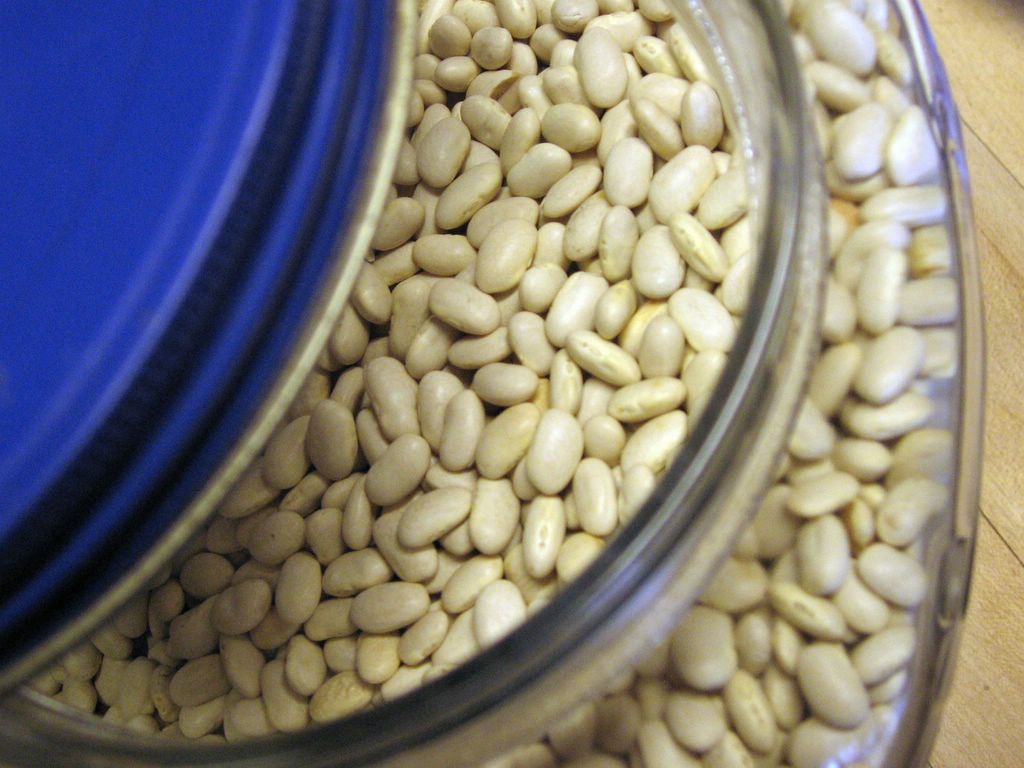
Organic great northern beans are a cheap and nutritious pantry staple.

Recipe below. . .

Monday, February 20

Recipe: Easy Spinach Soup Made with Fresh Spinach

This tasty, healthy, non-dairy soup is packed with fresh spinach and cooks up in about 40 minutes.

To me, fresh baby spinach is about as good as it gets in the vegetable department, and I could happily eat spinach salad five times a week. So you might assume that I devote a large portion of my kitchen garden to growing spinach each year. How I wish.

Spinach is fairly easy to grow from seed, but the plants prefer a long, cool growing season, not the wildly fluctuating temperatures we have in Missouri each spring and fall.

The other problem with growing spinach is that you need to plant a lot of it. Those 'bunches' of fresh spinach for sale at the market? They're not one single clump like a head of lettuce. Each one is actually about 50 little spinach plants made up of just a few leaves apiece and bundled together with a twisty tie.

Now start doing the math.

Even if I could get a decent spinach crop to grow, I'd need about two acres of plants to feed my habit, not to mention hundreds of hours to tend and harvest them. Store bought spinach is suddenly a steal.

Unfortunately, conventionally grown spinach is always near the top of the Environmental Working Group's Most Contaminated Produce ListThankfully fresh organic spinach is readily available. So I expend my energies in the garden growing Swiss chard (heat tolerant! cold tolerant! easy to grow from seed!) and treat myself to purchased organic spinach, which I buy by the pound and usually turn into enormous salads.

For many years, a version of the spinach soup in Margaret Fox's Cafe Beaujolais Cookbook (I love this book) was regularly featured at my dinner table. I made it with a box of frozen spinach (as does Margaret) and plain old canned chicken broth (she made her own stock), topped it off with a dollop of sour cream, and enjoyed every bowlful. Then I moved to a farm way out in the country, turned into sort of a food snob (but in a good way), and stopped making that soup. It's been years since I've even bought a can of chicken broth.

But the other night, two soon-to-be-outdated bags of organic spinach and a large bowl of rich, homemade chicken stock called out to me from behind the refrigerator door. It was 20°F outside, and there is only so much spinach salad even I can eat.

Naturally I turned back to my beloved Cafe Beaujolais recipe for guidance, but what I ended up with was like no spinach soup I'd ever had. I won't embarrass myself by admitting just how much of it I consumed in one sitting. Okay, one sitting and one standing over the pot in the kitchen. (Have you ever looked at how much of something has been eaten, known you were the only one who could possibly have eaten it, and yet started glancing frantically around the room for someone—anyone—to blame for some of its disappearance?)

Once again, top quality ingredients shine through in the simplest of preparations. And while the gist of Margaret's recipe remains the same, I've changed pretty much everything about it except the basic instructions.


A few chopped radishes as garnish add color, flavor, and a pleasant crunch.

Farmgirl Susan's Super Spinach Soup
Makes about 8 cups — adapted from Cafe Beaujolais

**Click here to print this recipe**

So what's so super about this spinach soup? It's super fast and easy to make, super delicious, and super good for you. It's rich and satisfying and yet contains no milk or cream. The secret to its thickness is a little uncooked white rice tossed in. If you're following Alejandro Junger's Clean program, use 3/4 cup cooked brown rice instead. Note that the texture of your soup won't be quite as smooth.

As always, I urge you to seek out local and organic ingredients; they really do make a difference. I recently discovered Lundberg Farms organic white long grain rice and love it. Their brown rices are really good too.


1/4 cup extra-virgin olive oil
1 pound yellow or white onions, chopped (about 3 cups)
1 to 2 cloves finely chopped fresh garlic
6 cups (48 ounces) organic chicken stock, preferably homemade
1/4 cup uncooked organic white rice
(or 3/4 cup cooked organic brown rice, see note above)
12 ounces fresh organic baby spinach
(about 8 cups packed)
1 teaspoon salt (you may need less if your chicken stock is salty)
1/2 teaspoon freshly ground pepper

Optional garnishes:
Sour cream of creme fraiche
A few finely chopped spinach leaves
Chive blossoms
Chopped radishes

1. Heat the olive oil in a 4 quart pot, add the onions, and cook, stirring frequently, over medium heat until translucent and just starting to turn golden at the edges, about 7 to 10 minutes. Stir in the garlic and cook 1 to 2 more minutes.

2. Add the chicken stock, turn up the heat, and bring to a boil. Add the rice, turn down the heat, and simmer, with the lid cracked, stirring every so often, for 20 minutes. (If you're using cooked brown rice, don't add it until step 3.)

3. Stir in the spinach, salt, and pepper and simmer another 5 to 7 minutes. Carefully puree the soup using a counter top blender or immersion hand blender.

4. Season to taste and serve hot, garnished if desired. Like most soups, this one tastes even better when reheated the next day.

Still hungry? You'll find links to all my sweet and savory Less Fuss, More Flavor recipes, including several more scrumptious soups, in the Farmgirl Fare Recipe Index.

© FarmgirlFare.com, the carefully blended foodie farm blog where Farmgirl Susan shares photos & stories of her crazy country life on 240 remote Missouri acres—and there's always homemade soup in the freezer.