Showing posts with label basil. Show all posts

Friday, August 5

Recipe Ideas: Wondering What To Do with Purple Basil?

Growing and harvesting green and purple basil in the kitchen garden 9 - FarmgirlFare.com
First harvest of the season on 6/28: a pound of Red Rubin basil from three plants.

Four years ago I grew my first purple basil—and had no idea what to do with it. And then I turned it into pesto. Wow. Except for the fact that purple basil doesn't look as pretty as the green in many dishes, and makes a rather oddly colored pesto, I would probably quit growing the green stuff altogether.

After a surprisingly rough start this spring (since basil is one of my few never-fail crops), I now have three Red Rubin purple basil plants flourishing in my kitchen garden (although they're not yet flourishing in that post). They've given me over 1½ pounds of beautiful bounty so far, and there's already more that needs to be picked.

For my favorite pesto recipe, along with lots of other ways to use purple basil, check out this post: Growing Purple Basil and What To Do with It, Plus My Purple Basil Pesto Recipe & the Easiest White Bean Appetizer Dip/Spread Ever. I've added printer friendly versions of the recipes, and there are links to all my basil growing posts and favorite basil recipes included, too.

Have you ever grown or purchased purple basil? What do you like to do with it?

© FarmgirlFare.com, where we're deep in the heart of pesto season.

Thursday, September 24

Summer Pasta Recipe: Sun Dried Tomato & Artichoke Pesto, Cherry Tomatoes, and Fresh Basil with Linguine or Farfalle

Cooking with Less Fuss, More Flavor

Enjoying more fast farm food from the kitchen garden

Tomatoes and basil on the third day of fall? You bet. The calendar may say summer is over, but the kitchen garden keeps to its own schedule, and mine says that tomato season is finally (finally!) in nearly full swing. The beautiful green and purple basil I've been picking since the end of June is still going gangbusters, too.

There's no better—or simpler—way to celebrate your garden fresh tomatoes and basil than to toss them with hot pasta, but adding this quick sun-dried tomato and artichoke pesto to the mix brings the dish to a whole other level.

I've made this with larger tomatoes chopped into chunks, but cherry tomatoes really work best. A mixture of red and yellow looks especially nice. I like to make this with fettuccine or farfalle (because bowties are always so much fun), but other pasta shapes would probably be good, too.

Sunday, June 29

Growing Purple Basil and What To Do with It, Plus My Purple Basil Pesto Recipe & the Easiest White Bean Appetizer Dip / Spread Ever

purple and green basil growing in my kitchen garden - FarmgirlFare.com
When it comes to basil, purple is the new green.

Got (or want) basil in your garden? You'll find links to all of my basil growing posts, as well as more of my favorite basil recipes, at the end of this post.

2011 Update: Farmgirl Fare readers offer up even more ways to use fresh basil here.

I have no idea how it happened, but spring 2007 found me and my kitchen garden completely basilless. Thankfully a gardening friend—whose tiny city garden I usually supply with plants—was kind enough to share a couple of basil seedlings with me, including a purple one.

I'm not very adventurous when it comes to herbs, and I'd never grown purple basil, but begging gardeners can't be choosers so I gratefully took what he offered and stuck it in the ground.

The purple basil plant flourished. It was gorgeous, but I didn't know what to do with it. I love fresh basil in all kinds of dishes, and I loved the color of these leaves, especially how they're outlined in green, but the thought of blackish purple basil pesto—or blackish purple basil anything for that matter—just didn't seem appealing.

My dear friend Kat, who writes the scrumptious blog, She's In The Kitchen, suggested I make basil vinegar with it: You fill a large jar with half white vinegar, half cider vinegar, stuff it with purple basil, and let it steep for a week. Then you strain it and pour the resulting gorgeous magenta vinegar into a pretty bottle with a few sprigs of fresh basil.

That sounded nice, but I wasn't sure what I would do with the vinegar either.

Growing and harvesting green and purple basil in the kitchen garden 9 - FarmgirlFare.com
First harvest of the 2011 season: a pound of Red Rubin basil from three plants.

I decided to appeal to my garden blog readers, begging them to tell me what they would do if they had a beautiful purple basil plant in their garden. They quickly came to my rescue with all sorts of delicious ideas, including:

—Add it to a white bean salad with some red peppers and green onions

—Throw it into a pot of beans, tomatoes, potatoes, zuchinni, and onion

—Put it in a red sauce made from fresh tomatoes

—Garnish anything that the flavor of basil will complement

—Stir into a slaw of chopped carrots, fennel bulb, and garlic just before serving

—Make purple basil lemonade or, better still, purple basil watermelon/honeydew melon agua fresca

Soilman in England suggested I put it in Mussels à l'Italienne and even offered up his recipe: Chopped onions sweated in olive oil for a few minutes. Add a few glugs of white wine and lots of chopped tomatoes plus tomato purée. Pour your mussels (cleaned and de-bearded) in, cover and cook for 5-10 minutes. Put into bowls with lots of chopped purple basil.

I couldn't wait to tell my city friend that I'd figured out what we could do with our purple basil. He listened patiently with a slight smile on his face as I recounted all these creative ideas. Then he said, "I turned mine into pesto."

"Oh yeah?"

"It was the best basil pesto I've ever had."

"Really?"

"It was like pesto on steroids."

"Wow."

"And it wasn't even that weird of a color."

"Huh."

So I skipped all the wonderful suggestions and turned my entire purple basil plant into the best pesto I've ever tasted instead.


Homemade purple basil pesto on homemade pizza (my easy pizza dough recipe is here)

Farmgirl Susan's Low Fat, Full Flavor Purple Basil Pesto
Makes about 1½ cups

**Click here to print this recipe**

This lower fat, reduced calorie pesto, which calls for less olive oil than most recipes, is bursting with freshly picked garden flavor. The tomatoes are a healthy way to replace some of the olive oil while adding a subtle new flavor.

When portioning out basil (and so many other ingredients), it works best if you weigh it rather than pack it into measuring cups. A digital kitchen scale is a worthwhile and useful investment, and once you have one you may wonder how you ever lived without it. I often use my Oxo 11-pound kitchen scale several times a day. The pull-out display is awesome, and it's also great for weighing outgoing packages.

Don't have any purple basil? Just use green instead!

1/2 cup (about 2½ ounces) roasted & salted whole almonds
3 to 6 cloves garlic, peeled
4 ounces fresh purple (or green) basil leaves (about 4 cups packed)
1 ounce (about 1/2 cup) finely grated Pecorino Romano (or other hard cheese)
10 ounces fresh tomatoes (about 3 smallish) any kind, quartered
1/2 teaspoon salt
1/3 cup extra-virgin olive oil, or more to taste

In the bowl of a food processor use the S-blade to whiz the almonds and garlic until finely chopped.

Add the basil, cheese, tomatoes, and salt, and process until thoroughly combined and the consistency you like.

With the motor running running, slowly drizzle the olive oil through the chute. Add more salt to taste if desired. Store your pesto in the refrigerator for several days or freeze.

Except for the fact that purple basil isn't as pretty as the green and does make a rather oddly colored pesto (as you can see in the photo above), I would probably quit growing the green stuff altogether. Mixing a few green leaves into the pesto does help brighten it up a bit.

Unfortunately my friend couldn't remember what kind of purple basil we were growing, so I figure I'll just work my way through every purple variety I can find and do some scientific taste comparisons. There are even certain types of basil plants that are half purple and half green.

I didn't forget to plant basil seeds this year, though I did get a rather late start. Five different types of basil, including Purple Ruffles and Purple Osmin, plus a mixed variety surprise pack are just now sprouting in little containers, but I have high hopes for a bumper summer crop. (And besides, my tomatoes won't be ready for ages either.) 2011 Update: I had really good luck growing Red Rubin basil (see photo above).

I might even turn part of my purple basil harvest into something other than pesto. But don't hold your breath, especially since I've discovered such a delicious way to use it.


Homemade pita chips: tastier than store bought & made in minutes

Really Easy White Bean Pesto Dip / Spread

**Click here to print this recipe**

Opening a bag of cheez doodles and pouring them into a bowl would probably be a slightly easier appetizer to make than this, but they wouldn't taste nearly as good - or be as good for you. This stuff isn't exactly beautiful, but trust me when I say that no one will notice.

The consistency of this spread will vary depending on the type of beans you use, how well you drain them after rinsing, and the thickness of your pesto. I made one batch with Great Northern beans and a slightly thinner pesto and ended up with a dip rather than a spread.

If it's too thick for your liking, simply thin it out with a little olive oil or water.

Cans of organic beans are an organic bargain and a handy staple in my farmhouse pantry; I buy them by the case. I really like Eden Organic brand beans, which are organically grown in the U.S.A. on family farms, have no salt added (I prefer to add my own), and are packed in BPA-free cans.

1 15-ounce can organic white beans, such as cannellini (also called white kidney beans), drained and rinsed
1/2 cup homemade or purchased basil pesto
1/2 cup finely grated Pecorino Romano or other hard Italian cheese
Salt to taste

Combine beans, pesto, and cheese in the bowl of a food processor fitted with the 'S' blade and whiz until smooth. Salt to taste.

Serve with pita chips (check out my easy recipes for homemade pita chips and pita bread, plus easy pita pizzas), crackers, raw veggies, or a spoon.

This spread improves with age, so try to make it a day ahead. Of course then you'll also have to try not to gobble it all up before serving time comes, but fortunately the recipe can easily be doubled.

After coming up with this recipe while my foodie mom was visiting last fall, I've become slightly obsessed with white bean dips. Sometimes I even have them as a main course (because I eat so much I don't have any room left for the actual main course).

It turns out that almost anything can be successfully mixed with a can of white beans (where have I been?), and I'll be sharing some of my other favorite creations soon.

More posts about basil:
9/21/06: How To Keep Your Basil Growing Into Fall
5/4/11: Bad Luck with Basil and Some Basil Growing Tips

More Farmgirl Fare recipes that call for basil:
Savory Tomato Pesto Pie with a No-Fail Biscuit Crust (one of my most popular recipes)
Simple Fresh Tomato Pizza Sauce (no blanching or peeling required)


Still hungry? You'll find links to all my sweet and savory Less Fuss, More Flavor recipes in the Farmgirl Fare Recipe Index.

© FarmgirlFare.com, where there can never be too much fresh basil, no matter what the color.

Tuesday, October 23

Recipe: Fresh Tomato & Basil Whole Wheat Sourdough Bread

Whole wheat sourdough bread made with fresh tomatoes and basil - FarmgirlFare.com

Are you a beginning bread baker? You might find my Ten Tips on How To Bake Better Artisan Breads at Home helpful.

One of the side effects of having a food blog is that I get lots of e-mail. Food e-mail. Bread e-mail. For a bread baking foodie, there's nothing better than finding a note like this in your in box:

It occurred to me that you might be interested in trying this bread. We tried making tomato basil whole wheat sourdough last week with tomatoes (as water) and roughly chopped basil leaves.

I'd be happy to send you the percentages if you are interested. It just seemed like something that was right up your alley. It was really quite delicious. Simply sliced with some smoked cheddar cheese it made a delectable sandwich.


Yes, it was definitely right up my alley, and it really was quite delicious. Even though they've been baked, you still get that fresh tomato flavor. Many thanks to fellow breadies Joel and his wife (in the wonderful state of West Virginia!) for generously sharing their recipe.


Fresh Tomato & Basil Whole Wheat Sourdough Bread
Makes 2 loaves, approximately 20 ounces each

What immediately piqued my interest about this bread was that it uses chopped fresh tomatoes in place of water. Such a brilliant idea. My only concern was what color it would turn out. I used to make savory feta cheese & sun-dried tomato scones when I had my little bakery cafe in Northern California, and while quite tasty, they were an odd sort of pinkish orange.

Using whole wheat flour, which bakes up darker than white flour, easily solves this problem. Joel's version calls for 100% whole wheat flour, but I used 50% whole wheat flour and 50% bread flour.

The tomatoes don't need to be peeled, which is always good news in my book. If you don't have any sourdough starter handy, I'm thinking that you could try replacing all or some of the water with fresh tomatoes in pretty much any bread recipe.

Creating a sourdough starter takes several days but isn't difficult to do. There are many different types, and recipes for them abound. I made my French levain starter several years ago using the instructions in Daniel Leader's Bread Alone, one of my favorite bread books.

I also love Local Breads, is Daniel's latest bread book, and am looking forward to making some of the European starters in it hopefully soon.

Joel's starter is 50% flour, 50% water, refreshed about 6 to 8 hours before using it. I simply refreshed my 50%/50% levain starter like I do when I bake pain au levain by adding flour to the entire batch and then letting it sit on the counter overnight. I think whatever sourdough starter you have should work in this recipe.

A digital kitchen scale makes baking and cooking so much easier. I love my 11-pound Oxo Good Grips scale (which was voted #1 by America's Test Kitchen for good reason) and often use it several times a day. The pull-out display is awesome, and it's also great for weighing postage.

As always, I urge you to seek out local and organic ingredients, as they really do make a difference.

300 g refreshed sourdough starter (10-1/2 oz,1-1/8 cups)
300 g coarsely chopped fresh tomatoes, preferably juicy organic heirlooms (about 2 medium, 10-1/8 oz)
30 g coarsely chopped fresh basil (2 large handfuls, 1 oz)
225 g whole wheat flour (7-7/8 oz, 1-3/4 cups)
225 g bread flour (7-7/8 oz, 1-3/4 cups)
113 g warm water (4 ounces, 1/2 cup; may not need)
1 Tablespoon salt (15ml)

Combine the sourdough starter, tomatoes, and basil in a large bowl. Stir in the whole wheat flour and most of the bread flour. Mix until roughly combined, then let rest for 20 minutes. This is the autolyse.

At this point, you can add up to 4 ounces (1/2 cup) warm water if your dough seems like it's going to be too stiff (it will depend on how juicy your tomatoes are). Or you can add more chopped tomatoes; I didn't have any more or that's what I would have done. How slack (wet) you want the dough is up to you.

With the extra 4 ounces of water, mine ended up so slack it was sticky and hard to work with, and the loaves really spread out while proofing despite using a couche. The bread still came out great, but I'll make a slightly stiffer dough next time.


Kneaded and ready to ferment (rise for the first time)

Turn the dough out onto a floured work surface and knead in the salt. Continue kneading for 10 to 15 minutes until the tomatoes are incorporated and the dough is soft and smooth, adding more bread flour as needed.

Place the dough in a straight-sided food grade plastic container with a snap-on lid and let it rise (ferment) until it has doubled in size, about 2 to 4 hours. You should be able to push a floured finger deep into the dough and leave an indentation that doesn't spring back.

Cover a baking peel (also called a pizza peel) with unbleached parchment paper (this is wonderful stuff) and sprinkle it with flour.

Turn the risen dough out onto a lightly floured work surface, flattening gently with your hands to break up any large air bubbles. With a bench/pastry scraper (these are so handy; I use mine all the time) or large knife, cut the dough into two equal pieces and shape them into rounds or logs about 12 inches long.

An hour before baking, place a baking stone (the secret to crusty breads and amazing pizzas) on the middle rack and heat the oven to 500 degrees.


Nestled in their couche and ready to proof


Place the loaves smooth side up on the parchment paper, about 2 inches apart. Make a couche by lifting the parchment paper between the loaves, making pleats and drawing the loaves together. Tightly roll up two kitchen towels and slip them under the parchment paper on the sides of the two outer loaves to support and cradle them.

Lightly dust the tops of the loaves with flour and cover them with plastic wrap or a damp tea towel (my preference). This nifty parchment couche trick comes from Local Breads. Alternatively, you can use a traditional, well-floured canvas couche as I did above.

Let them proof until almost doubled in size, about 1 to 2 hours. If you press a floured fingertip into the dough it should spring back slowly.

Quickly score the tops of the loaves with a blade or sharp knife (I use a large serrated knife) and slide them, still on the parchment, onto the baking stone. Bake until the loaves are dark golden brown and the bottoms sound hollow when tapped, about 25 to 30 minutes. Try to let them cool for at least 40 minutes before tearing into them.

Store in a resealable plastic bag at room temperature or freeze.

Baking notes: I only had enough garden tomatoes left to make this recipe once, but I'll be experimenting with it more next summer. I'm thinking the tomato flavor could be enhanced even more with the addition of a few slow roasted tomatoes, a speciality of my food blogging pals Kalyn and Alanna. Maybe next year I'll finally talk myself into turning the oven on for hours and hours during the mid-summer heat to make some. They both keep assuring me it's worth it.

Still have more flour left? You'll find links to more scumptious bread recipes in the Farmgirl Fare Recipe Index.

© FarmgirlFare.com
, where Farmgirl Susan shares recipes, stories, and photos from her crazy country life on 240 remote Missouri acres—and there's always at least one sourdough starter in the fridge.

Saturday, August 25

Tomato Pesto Pizza, My Favorite Basil Pesto Recipe, & The Simplest Tomato Salad

Tomatoes & Homemade Pesto Are
A Match Made In Summer Eating Heaven


Homemade basil pesto & tomato pizza (my easy dough recipe is here)

When we're young and naive and clueless in the kitchen, we naturally look to those who are older and more knowledgeable for guidance and advice. And like certain traumatic experiences on the childhood playground or the junior high school dance floor, some of what we're told ends up sticking with us for life.

Garlic salt is a waste of money because half of what you're paying for is plain old salt; buy pure garlic powder instead.

Bad water makes bad coffee.

Overripe bananas will always give you the best tasting banana bread.

And fresh tomatoes should never, ever be put on a pizza because they'll make it soggy.


To this day I wonder why anyone would purchase garlic salt instead of garlic powder or granulated garlic. When it comes to coffee, I'm borderline obsessive regarding every aspect of its preparation, and most people would probably run away screaming if they saw the scary black bananas I often use when baking.

But it took many years of deprivation before I realized that whole thing about not putting fresh tomatoes on pizza was positively flat out wrong.

A freshly picked, vine-ripened tomato from the garden is, for many people, the epitome of summer eating. For me, it's a tie between tomatoes and fresh basil pesto. When combined, these two symbols of summer become much more than the sum of their parts, and never more so than on a homemade pizza.

Like a hunk of old-fashioned devil's food cake, a salad of freshly picked lettuce, or a perfectly grilled steak, a pizza topped with basil pesto and big slices of orange tomatoes is one of the most beautiful things you'll ever see on a plate. And of course leftover pizza of any kind is one of life's truly great inventions.

For the 8-inch pizza pictured above, I spread a thick layer of pesto on the dough, covered it with slices of fresh mozzarella, added slices (not halves) of sweet, fat cherry tomatoes, then sprinkled on some coarsely grated pecorino romano.

For a second pizza, I completely covered the pesto with a layer of chopped Roma tomatoes and then added the cheese. I cooked them both at 500 degrees on a hot baking stone on the lowest rack of the oven until the crust was golden and the cheese was bubbly and starting to brown. You'll find my simple and straightforward pizza dough recipe here.

If your chopped tomatoes are really juicy, you can put them in a colander or strainer and let some of the water drain out before putting them on your pizza. I did this with the Romas as an experiment, but they were so meaty it didn't make much of a difference.

If you don't have the patience to make yourself a mid-summer pizza (or the desire to turn your kitchen into a blazing inferno in the process), the next best thing to do with your pesto and tomatoes is to combine them into a pie. I created this easy and popular Savory Tomato Pesto Pie recipe last summer, and it really is worth turning on the oven for.*


But if neither pizza nor pie are an option, toss a pile of chopped tomatoes with some pesto, stir in a can of garbanzo beans (rinse them first)**, sprinkle on some freshly grated parmesan or pecorino romano, and in less than two minutes you'll not only be digging into a scrumptious and healthy salad, but you'll also have saved yourself from simply gobbling up all of your precious homemade pesto with a spoon.

Basil has proven to be one of the few no-fail crops in my Missouri kitchen garden, and despite making and freezing enough pesto each summer to last me through the rest of the year, I still always end up with more basil than I can use.

This spring, however, I somehow forgot to start any basil seeds. I also forgot to order any. And then I forgot to plant the partial packets of old seeds I found after a frantic, late June search through my highly unorganized seed stash.

I've become so absentminded lately that I'm starting to wonder if my body has been taken over by a pod person who only lets my real mind out maybe once or twice a week.

Thanks to the generosity of a couple of fellow gardeners—including a city friend whose tiny garden I usually supply with seedlings—and an agonizing several minutes during which I eventually talked myself into plunking down four bucks for a potted basil plant at the supermarket, I now have a small but respectable patch of basil flourishing in the garden.

I made my first batch of pesto last week, and there's already enough basil for another one. A dozen kinds of ripe tomatoes cover every flat surface in the kitchen. Things are getting back to normal in my culinary universe.

So what's your favorite way to enjoy pesto and tomatoes? And what's the best—or worst—kitchen or cooking tip you've been given? I need to know if I've been missing out on anything else as good as fresh tomatoes on homemade pizza.

Update: This was the first year I grew purple basil, which makes fantastic, albeit slightly odd looking pesto. For other ideas for using purple basil, along with a super easy white bean pesto spread recipe, check out this post. And Farmgirl Fare readers offer up more wonderful ways to enjoy purple basil here.


At last! Beautiful basil in my kitchen garden.

Farmgirl Susan's Lower Fat, Full Flavor Basil Pesto
Basil pesto recipes abound, but this one is different than most: it calls for almonds and tomatoes, and a relatively small amount of olive oil. I love olive oil as much as the next person, but some pesto recipes call for 2 cups of basil and 1 cup of olive oil. They taste sublime (how could they not?), but personally I'd rather consume all those extra calories in a piece of pie, and my recipe lets you do just that.

The idea of using almonds came from a pesto recipe I found in The Sonoma Diet, a delicious cookbook for anyone who loves good food, even if you aren't trying to lose weight. I don't care for pine nuts, but I'd never thought to use almonds in pesto, and I was thrilled with the results. I like using roasted and salted almonds.

The tomatoes are my own addition. They give the pesto a subtle new flavor while thinning it out. I love the strong, salty taste (and lower price) of pecorino romano and always keep some around, but real parmigiano reggiano can of course be substituted.

Makes about 1½ cups

1/2 cup (about 2½ ounces) raw or roasted and salted whole almonds
4 ounces fresh basil leaves (about 4 cups packed, but it's best if you weigh it; I love my Oxo 11-pound digital scale)
3 to 6 large cloves garlic, peeled
1/2 cup finely grated pecorino romano cheese (or parmesan)
10 ounces fresh tomatoes (about 3 smallish) any kind, quartered
1/2 teaspoon salt
6 Tablespoons extra-virgin olive oil, or more if desired

If using raw almonds, spread them on a baking sheet or piece of aluminum foil and place in a 350 degree oven for 8 to 10 minutes; a toaster oven works great for this, especially in summer (I adore my Oster Toaster Convection Oven and use it daily all year round).

Process the almonds and garlic in a food processor until finely chopped. Add the basil, pecorino romano, tomatoes, and salt and process until thoroughly combined and the consistency you like. Alternatively, you can use a gigantic mortar and pestle if you're trying to build up your arm muscles.

With the motor running, drizzle in the olive oil through the chute. Add more salt to taste if necessary and more olive oil if desired.
This pesto will keep several days in the fridge, or you can freeze it. Cover the top with a thin layer of olive oil to keep it from discoloring if that sort of thing bothers you.

*Last week I was surprised to discover that my Savory Tomato Pesto Pie post, which I had completely forgotten I'd begun by saying "Sometimes it's good to be alone in the kitchen," was published almost one year to the day before my recent review of Alone In The Kitchen With An Eggplant. By the way, have you divulged what you eat when you find yourself alone in the kitchen yet? The ever growing list we're compiling is truly fascinating. So do tell!


© FarmgirlFare.com, the pesto slathered foodie farm blog where Farmgirl Susan shares recipes, stories, and photos from her crazy country life on 240 remote Missouri acres.

Wednesday, August 30

Daily Farm Photo: 8/30/06


In Season

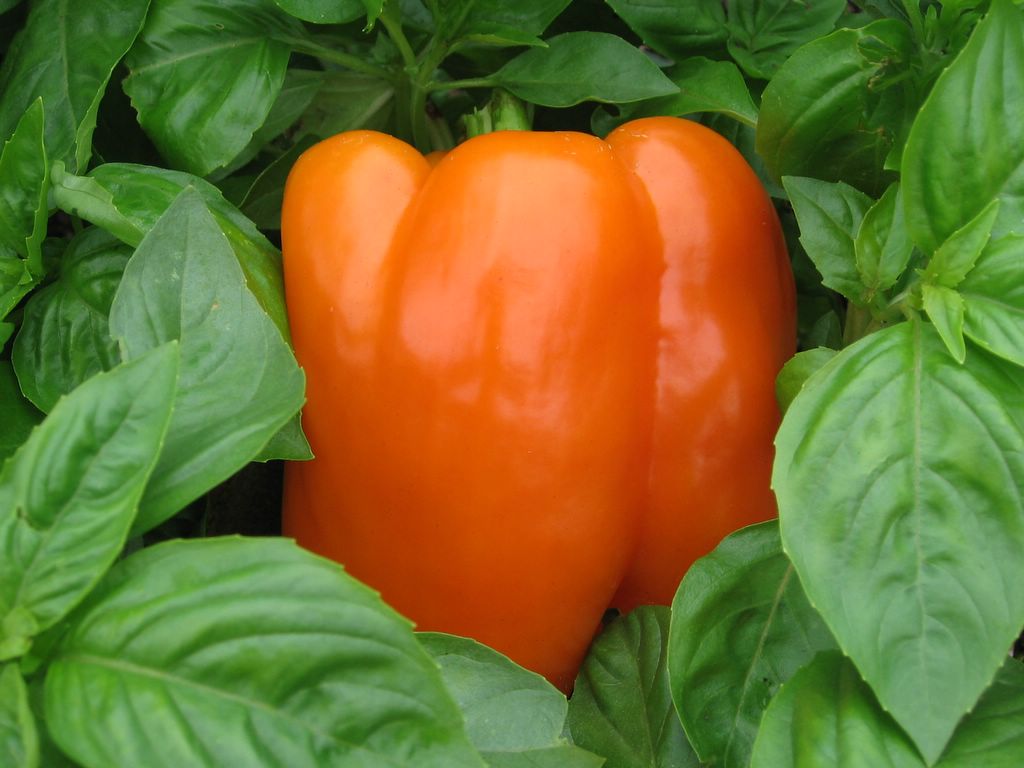
Even after all these years, there is an indescribable feeling that comes over me when I harvest something from my kitchen garden. Maybe if you took enormous scoops of joy, passion, pride, excitement, exuberance, hunger, & delight, and then tossed them all together in a bushel basket you might come close. But only close. For you really must rub your fingers across the smooth, almost unreal surface of this sweet bell pepper. And bury your face in the scent of basil. And be blinded by the jewel-like colors of high summer. Only then can you truly begin to feel it. The thrill of the garden. The simplicity of absolute bliss.

It is also difficult for me to describe just how rewarding it is to hear from so many of you who have been inspired by Farmgirl Fare and In My Kitchen Garden to get your hands dirty and grow something edible--whether that meant tearing up half your backyard and filling it with vegetables or simply sprinkling a few lettuce seeds in a windowbox. Thank you for letting me know. May your gardens and your enthusiasm continue to flourish. And may you always find your bliss.

A year of Daily Photos ago:
From Here To The Barn Seems To Take An Eternity

Saturday, August 12

Recipe: Savory Tomato, Mozzarella, and Basil Pesto Pie with an Easy Cheesy Biscuit Crust

Scared of pie crusts? This easy biscuit crust is perfect for beginners. For even more flavor, try it with the optional Italian sausage!

August 2016 update: This is one of my most popular summer recipes, which men seem to especially love. Click here to read a sampling of rave reviews from the comments section. Thanks so much to all of you who take the time to come back and report on my recipes. And thanks for pinning them on Pinterest too!

Sometimes it's good to be alone in the kitchen. That way, when you pull a pie like this out of the oven and are standing there staring at it while it cools on the counter, mouth watering, stomach rumbling, fingers twitching, you don't have to worry about losing control and getting your hand slapped because you can't resist it.

You can simply tear off a piece of that warm, golden crust and pop it into your mouth and nobody will ever know, because pieces of crust break off pies all the time.

Of course if you end up nibbling off five or six inches around the edge, you're going to have to come up with a good explanation as to why it is missing. Pets can be quite handy for this.

If the pie is just for you, then you'll be forced to face the fact that you just gobbled up the very best part off a large portion of your pie.

Saturday, September 3

Daily Farm Photo: 9/3/05


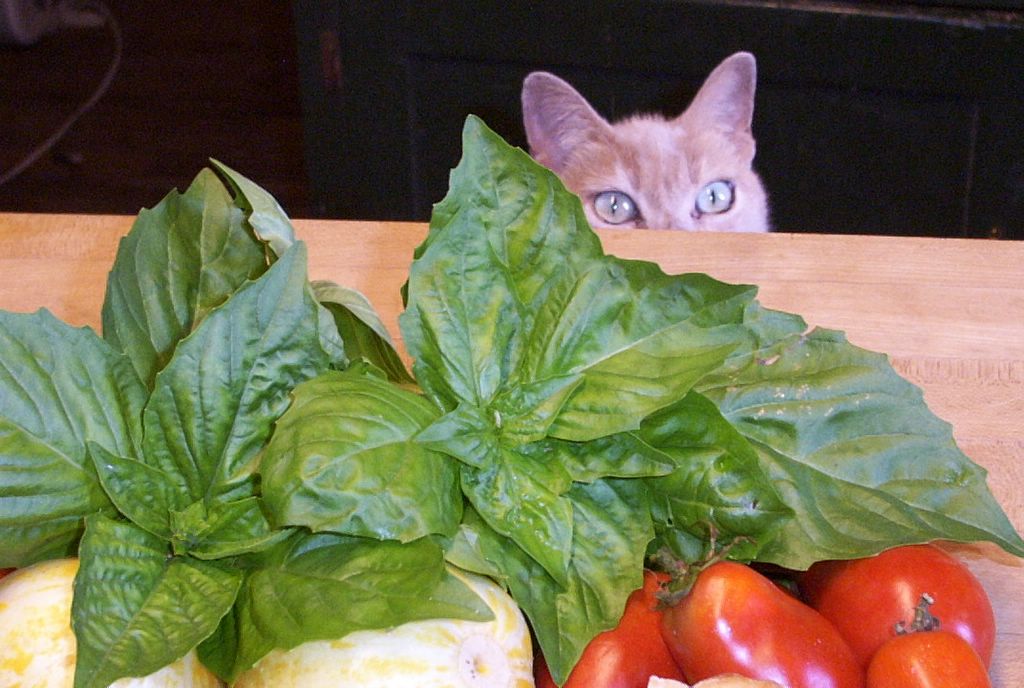
Photoshoot Inspector

Attention Cat Lovers! It's time for Weekend Cat Blogging #13!
Food Bloggers around the world unite each week and share pictures of our favorite felines. See cute cat photos and discover yummy food blogs.
You'll find all the links to this week's entries at Eat Stuff in Australia (run by the adorable Kiri). We'd love to have you join us. Just send your permalink in a comment to Clare (Kiri's slave) at Eat Stuff and add a "Weekend Cat Blogging" tag to your post.